

⊹ the circe brief ⊹
Ask a woman why she stayed at her W-2 job instead of founding the thing she keeps talking about at dinner. She’ll rarely say “fear.”
When a woman leaves a W-2, she loses the plan that covers healthcare, IVF, egg freezing, childcare, the leave policy she’d need if her mom got sick.
We’ve spent the last year staring at that list ourselves, because we want to build and we also want options. It turns out the two are priced against each other, and almost nobody talks about it.
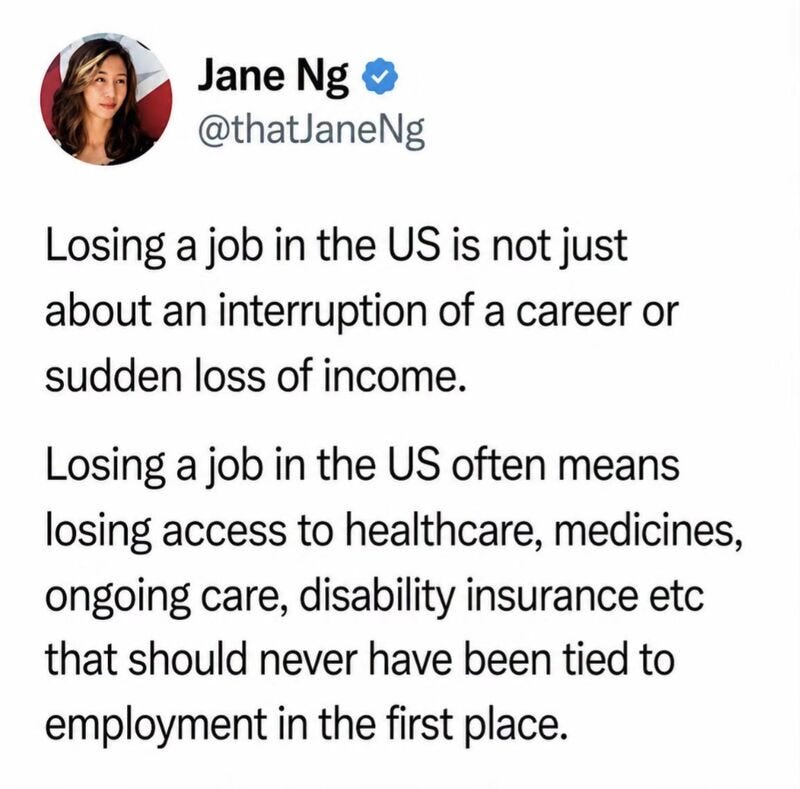
Economists have a name for this. They call it entrepreneurship lock. One study found that a 1% increase in benchmark marketplace premiums cuts entry into self-employment by 0.76%. When the ACA expanded access to insurance outside of employment, self-employment rose among the people who needed coverage most. In other words, a lot of people aren’t staying at their jobs for the job.
a quick history lesson (bear with us)
So, how did employers got that power in the first place?
In 1942, with the country at war, Congress froze wages to keep inflation down. Employers still needed to win workers, and benefits weren’t frozen, so they started competing on health coverage instead of pay. In 1943 the IRS ruled that the premiums an employer paid didn’t count as taxable income, and in 1954 Congress wrote that into the tax code for good. A $500 health plan became worth more than a $500 raise, and that’s still true today. No other developed country runs healthcare through the employer like we do, and we do it because of a wartime workaround from 80 years ago. Cool, cool.
It made some sense when a job lasted an entire career. Staying at a job longer means you avoid the costs and hassle of switching plans: coverage gaps, waiting periods, switching networks etc.
It makes very little sense now. Median tenure at a job is 3.9 years, the lowest since 2002, and for people 25 to 34 it’s 2.7. For women it’s 3.6.
Meanwhile 64 million Americans did freelance work in 2023, 38% of the workforce, and the fractional CMO, the solo GP, the consultant with four clients are now normal career shapes. The system assumes you’ll be somewhere long enough for the plan to matter, and increasingly, you won’t.
are women actually more risk averse?
The startup world still loves to explain the founder gender gap with risk tolerance. We went looking, and that explanation doesn’t hold up. When researchers pooled 54 studies covering about 7,000 people, a gender gap in risk-taking showed up in fewer than 10% of them, and where it did show up, it was tiny. In one Stanford experiment, women only acted more risk averse after being reminded of a negative stereotype about women. A later attempt to replicate it found no gender gap at all, reminder or not. And when women do take the bet, it pays: BCG found women-founded startups generated 78 cents in revenue for every dollar of funding. Men generated 31.
So we started wondering if something else is going on. Women don’t have less appetite for risk. They have more to lose.
Take insurance. Women seek more care than men, even with pregnancy taken out of the math, and they hit their deductibles and out-of-pocket maximums more often. Employed women pay about $15 billion more out of pocket every year than men with similar coverage. So a woman leaving her employer’s plan is giving up something she uses more and already pays more for. She’s also usually launching with about half the capital a man would, which leaves less room to cover the gap herself.
Then there’s care for everyone else. Three in five family caregivers are women, and almost half of caregivers under 50 are looking after kids and an adult at the same time. Among working mothers who want to start a business, 72% of those without affordable childcare say caregiving is a barrier.
And that’s before we get to the part of women’s health most plans won’t touch.
let’s talk about fertility
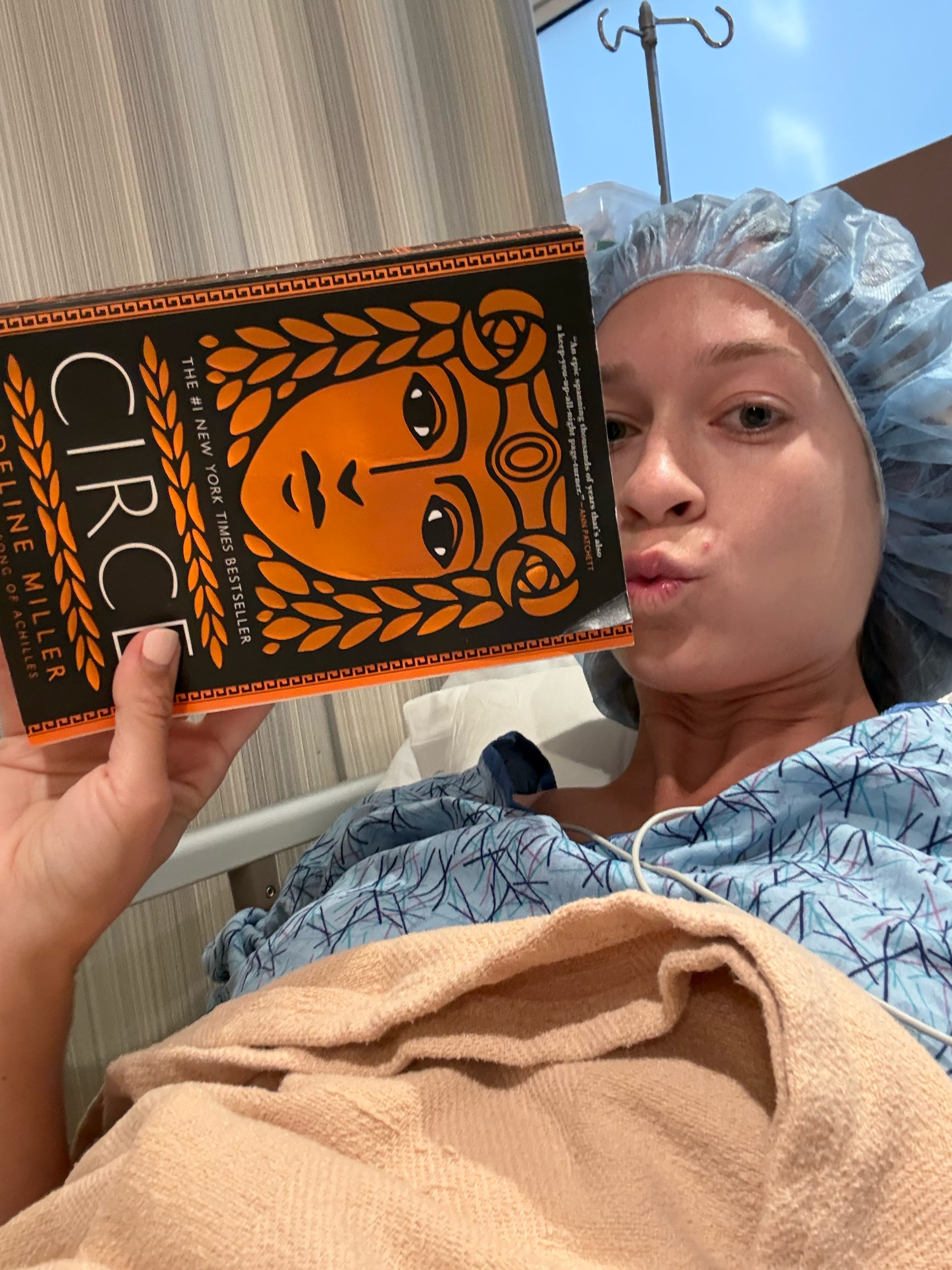
Fertility raises the stakes further, and this part is personal. I (Anna) froze my eggs earlier this year. The only reason I could was because I am lucky to be covered under my partner’s plan. Isa’s looking into it now, and it’s become the first thing she checks when a job comes up or she thinks about going full time on something: does this plan cover egg freezing?
Only about 22% of large employers cover elective egg freezing. If you buy your own insurance, fertility treatment isn’t one of the benefits the ACA requires. About half the states have some kind of fertility mandate, but most require an infertility diagnosis, and the ones that cover freezing mostly mean freezing before chemo. Freezing your eggs because you’re building a company and want to keep your options open doesn’t come with a diagnosis code.
The employers that do cover it usually go through a fertility benefit like Carrot or Progyny. Leave that job to start something and the benefit leaves with you. The average cycle runs about $11,000, and many women need more than one.
For a lot of our friends, this has become an increasingly important factor in where they work. Women are waiting longer to have kids (the average first-time mom is now 27.5, and older in big cities), so often the years you’d spend building a company overlap with when you’d want to freeze. We both spent a lot of business school figuring out what came next with this exact question in the back of our minds.
We also asked a our dear friend Brian at EvCo what it would take to put together a fertility bundle for a group of women founders. The answer: expensive. Insurance works by pooling people who’ll use a lot of care with people who won’t. A group of women signing up specifically for fertility coverage is a pool where almost everyone uses it, which insurers call adverse selection, so they’d price it as high risk. It’s part of why fertility coverage mostly lives inside big employer plans, where the cost gets spread across a lot of people who’ll never touch it.
benefits are infrastructure
Accelerator perks are built around the company: cash, cloud credits, discounted software, intros. Almost none of them touch the founder’s own life. That works fine if you don’t need a health plan, childcare, or more time on the fertility clock. It doesn’t work for a lot of the women we know.
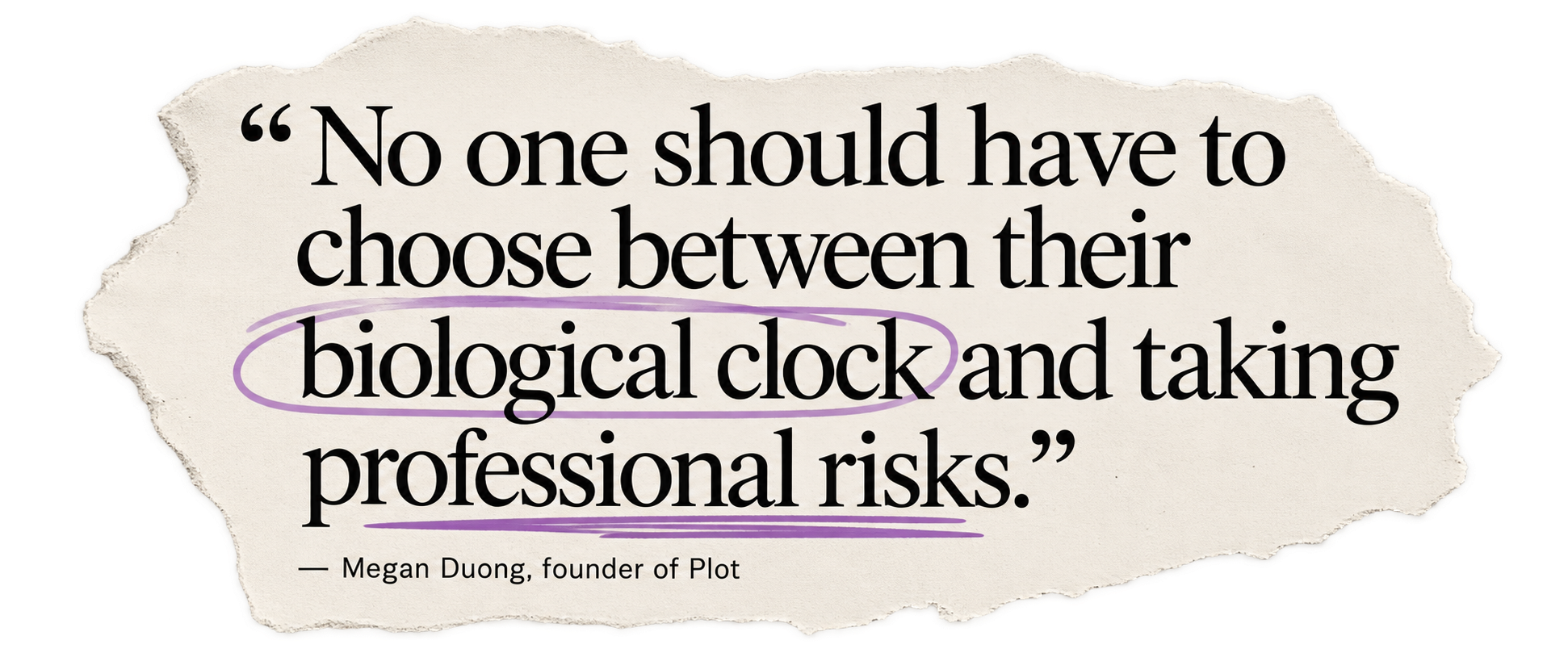
A few investors are starting to change that. When Alexis Ohanian started Seven Seven Six, he attached a 2% Growth and Caregiving Commitment to every check: non-dilutive money for pre-seed and seed founders to spend on childcare, fertility, mental health, even a vacation. Megan Duong Trivedi, Co-Founder and CEO of Plot, used hers to freeze embryos with her partner.
Imagine if every accelerator offered fertility coverage, menopause support, and childcare. That would change who applies, who says yes, and who stays in the game past year two. There’s even a proof point abroad: when China subsidized health coverage for people outside formal employment, women’s entrepreneurship rose.
Until then, there are options. If you’re between 21 and 33, Cofertility’s Split program lets you freeze your eggs for free, including 10 years of storage, when you donate half of them to a family who can’t conceive otherwise. If you’d rather keep all your eggs, their Keep program offers discounted pricing. Fertility lenders like Future Family and CapexMD finance egg freezing, and many clinics have their own payment plans. An HSA paired with a high-deductible plan lets you pay for infertility treatment and other uncovered medical costs with pre-tax dollars. Discount programs like WINFertility cut costs further. And talk to a broker (shout out Evco!) before you quit, so you can price your coverage gap like any other line item in your runway.
why we care about this
We started Circe because we were infuriated by the stat we’ve all heard by now: about 2% of venture dollars go to all-female founding teams (and lately it’s been closer to 1%). Funding is the barrier everyone knows about. But if we want more women starting companies, and building ones that last, we have to pick apart every barrier between a woman and the founder seat.
Benefits are the unsexy part of this conversation. They’re so tied up with employment that most people never question them. But for a lot of women we know, whether a plan covers egg freezing or childcare has become part of the math on whether to start something, and when.
We want a future where fertility and childcare support come built into accelerators and fund terms from day one, so a founder doesn’t have to figure it out alone on top of building a company. Seven Seven Six showed it can be done with 2% of a check. Getting and supporting more women into entrepreneurship is going to take that kind of creativity, and the funds that figure it out first are going to meet a lot of women who, right now, are still just talking about it at dinner.
-Isa and Anna ⊹

upcoming events

oct 5 | tech week masquerave | RSVP
⊹

oct 17 | girls run + brunch | RSVP
⊹

oct 2 | cherry launch party | RSVP
⊹
check out our full calendar of events.
jobs by female founders
Forward Deployed Strategist — Coval, SF (Respond to us if you want direct intro!)
Sales/GTM — Riveter, SF (Respond to us if you want direct intro!)
Chief of Staff (& Others) — Complete, SF (Respond to us if you want direct intro!)
Chief of Staff — Soma Health, reach out to founder Jiali directly
Design Engineer, Founding Engineer, Internships — LegalOS, SF (Respond to us if you want direct intro!)
That’s all from us this week! We’re so happy to have you follow along in our journey, and if you want to officially be part of our community, you can apply here.